Mercedes-AMG F1 and UBS teamed up again to challenge a class of 85 eleven-year-olds from Camden to design, 3D print and test their own racing cars.
This was a follow-up to our first Hamilton Engineering School campaign last year. That time we sent 3 young, aspiring engineers from the primary school in Camden, to the Mercedes factory in Brackley, where they were surprised by Lewis Hamilton in old man make-up…
This project was a follow-on, as part of a wider initiative to invest in STEM education for young people. Both UBS and Mercedes-AMG F1 are particularly interested in reaching those who historically would have had less access & opportunity to find out enought about them to consider a career in engineering.
So we went back to the same school in the heart of Camden and put together an extra-curricular week for the whole of their Year 6 to use 3D CAD software to design their cars, have them 3D printed and put them to the test.

This idea was not without its challenges. Firstly we were relying on the students’ ability to master the design process in Fusion 3D CAD software in a very limited time. The students had one day to learn how to use the software (which was meant for secondary school students as the simpler programme was not suitable for 3D printing) and create their own car designs.
As a result we had to bring on a 3D design engineer (who happened to be a former Mercedes-EQ Formula E Team intern engineer), who built a template in the software. We then recorded a series of tutorial videos to help the student learn the steps as quickly as possible.
The TSE and UBS team also had to learn the 3D software to a high proficiency ourselves, so we could help any students who were having difficulties. If any group of students were too slow they risked not having a complete racing car in time to be sent to the printers.


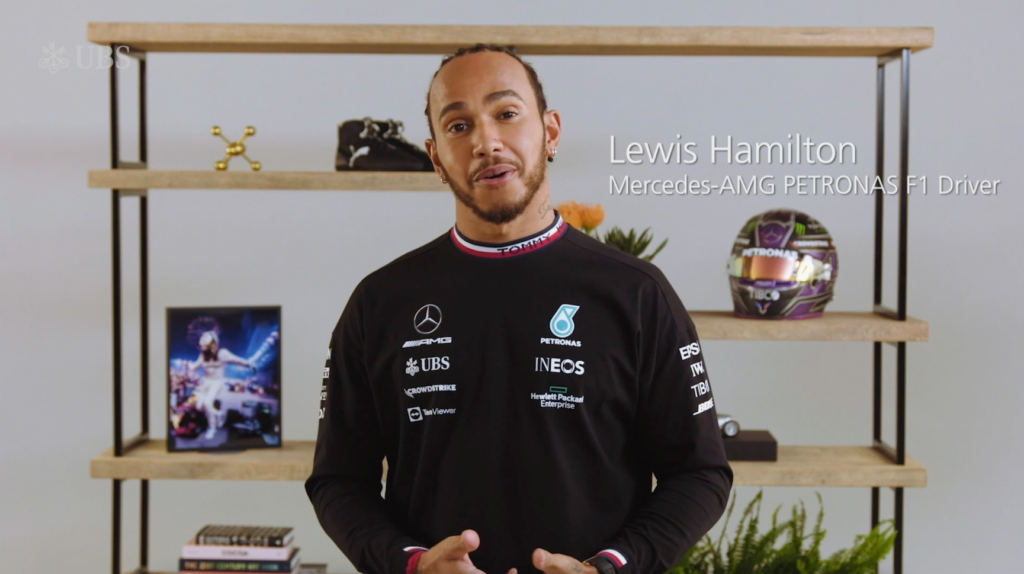
However, the responses of the children and the results they were able to deliver in four days were incredible. The outcome was a very heart-warming film and – more importantly – 85 children gained a greater understanding of one of the most sophisticated design and engineering processes humans have devised – plus potentially some inspiration for their futures.
The results from the promotional campaign that supported it showed a significant Quality Engagement Rate – our benchmark metric for measuring success. The QER is measured by adding the number of people who viewed a significant portion of the film plus the number of social engagements across platforms.
With this kind of film you are normally looking at the overall viewcount, which can be in the millions. These days a very high proportion of these will have watched less than 5 seconds of footage, though.
So we are much more interested in tracking those that do sit with it long enough to get the core messages and have some kind of emotional or cognitive response. And we’re still talking more than half a million of these, so does retain some scale but more importantly guarantees a certain level of engagement and – hopefully – awareness of what the partnership is trying to achieve.